The New Jersey Institute for Social Justice invites young people across New Jersey to participate in the Truth & Repair Video Contest — a creative opportunity to explore what reparations means, why it matters and what it could look like for our communities.

Participants are encouraged to create a short, original video that engages audiences in understanding the history, urgency and future of reparations. Selected videos will be featured across the Institute’s social media platforms and showcased at the Institute’s Youth Power Summit and other public events.

This is more than just a contest — it is a platform for cultivating the next generation of racial justice leaders and reparations advocates. Through storytelling, creativity and critical reflection, young people will help shape the narrative and build momentum for truth, accountability and repair.
Contest Categories and Awards


Category Eligibility Award
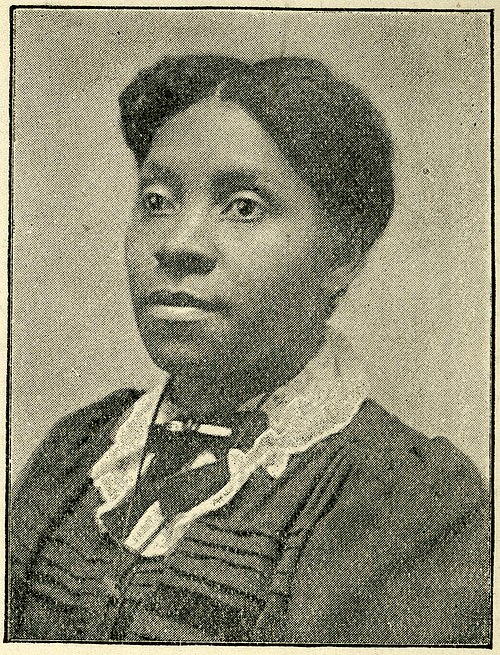
Callie House Video Open to 13 to 15-year-olds $500 cash prize
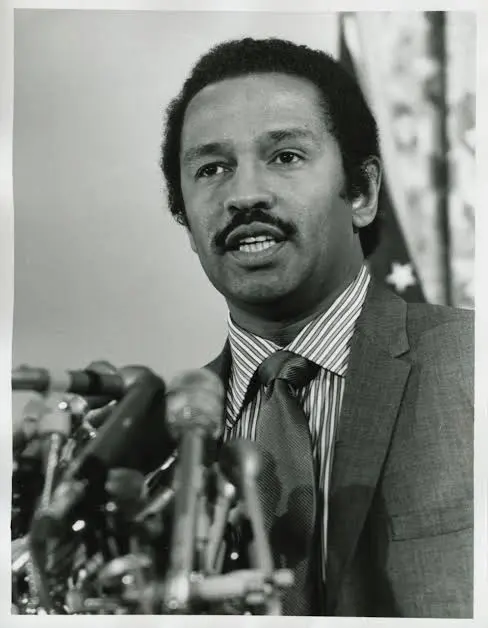
John Conyers Jr. Video Open to 16 to 18-year-olds $500 cash prize
Paul Robeson Video Open to 19 to 25-year-olds $500 cash prize
Video of the Year Open to youth of all ages (13 to 25), the winner of this category will be selected by judges as the overall best video from all submissions. $500 cash prize
People’s Choice Open to youth of all ages (13 to 25), the winner of this category will be voted on by the public and receive the most engagement across all social media platforms. $500 cash prize


Additionally, all winners will:

• Be invited to participate in a public screening of the winning videos and panel discussion at the Institute’s Black August event (Date TBA)
• Be invited to participate in the Institute’s annual Youth Power Summit (September 19, 2026)
• Have their work featured across Institute platforms and events
• Be invited to stay involved as Youth Reparations Ambassadors, supporting ongoing organizing and advocacy efforts

Digital Certificate: Everyone who enters the competition will receive a digital certificate to thank them for participating.

Eligibility & Submission Guidelines

  • Open to youth ages 13 to 25
  • Must be a resident, work, or attend school in NJ
  • Proof of age and residence will be requested of winners
  • Location: Remote
  • Submission Deadline: June 1, 2026 at 11:59pm
  • Entry Fee: There is no entry fee to enter or win the contest.
  • Only one video per candidate can be entered during the submission window

Video Guidelines

  • Content: Videos must be related to reparations in New Jersey
  • Length: Videos must be between 1 to 2 minutes
  • Format: Vertical (1080 x 1920px, 9:16 ratio)
  • File Type: Video should be .MP4 or .MOV
  • Participants are encouraged to be creative! Videos may include:
    • Spoken word, storytelling or speaking directly to camera
    • Music, performance or visual art
    • Animation, graphics or slides
    • Or any other creative approaches

How to Submit Your Video

Please upload your video to YouTube as an unlisted video, then copy and paste the video into an email and send to videocontest@njisj.org with a subject line “Youth Video Contest.” In the text of the email, please provide:

  • Your Name
  • Age
  • Zip Code
  • Phone Number
  • Would you like to have your video considered for the People’s Choice category? (This means it may be selected to be shared on social media and voted on by the public)

Do not submit the video as public unless otherwise instructed.

Prompts

Participants may consider the following questions to guide their videos:

• Why should young people be involved in — and lead — the movement for reparations?
• Why is it necessary to confront history and truth in order to repair the present?
• What is the connection between slavery and present-day racial inequities and the wealth gap?
• How do the realities faced by your community connect to the history outlined in the NJRC report?
• How would reparations impact your life or your community?
• How do you respond to common misconceptions about reparations (ex: “it’s just about money” or “it’s not our responsibility”)?
• How should young people learn about slavery and be engaged in that learning process?
• What does it mean that 56% of New Jersey residents are unaware that slavery existed in the state?

How Will Videos be Judged?

All video submissions will be reviewed by a panel of judges using a clear and consistent scoring system. Each video will be evaluated across six key areas: creativity, quality, historical understanding, connection to the NJ Reparations Council, centering of youth voice, and connection to reparations.

Strong submissions will not only be informative, but also creative, thoughtful, and grounded in your unique perspective as a young person. You don’t need professional equipment or to be an expert – what matters most is a clear message, authentic voice, and meaningful connection to the theme of truth and repair.

Scoring System
In each area, judges will assign a score ranging from 1 to 5:
1 – Unsatisfactory / Poor
2 – Needs Improvement / Below Expectations / Fair
3 – Competent / Meets Expectations / Average
4 – Highly Effective / Exceeds Expectations / Good
5 – Exceptional / Outstanding / Excellent

Each video can receive a maximum score of 30 points and minimum of 6 points.

Evaluation Criteria

Judges will consider the following when reviewing each submission:


AREA OF EVALUATION WHAT WILL JUDGES CONSIDER?
Relevance to Prompt
  • Does the video clearly respond to one of the contest prompts?
  • Is the content focused and on topic?
Understanding of NJ’s History
  • Does the video demonstrate knowledge of New Jersey’s history as a slave state?
  • Does it connect historical harms to present-day racial disparities?
Connection to Truth & Repair Campaign
  • Does the video highlight the importance of confronting history as a step toward reparations?
  • Does it reference ideas, findings, or proposals from the NJ Reparations Council report?
Youth Voice & Perspective
  • Does the video center the voices, ideas, and lived experiences of young people?
  • Does it show how youth can engage in the reparations movement (e.g., organizing, advocacy, education, art)?
Creativity & Storytelling
  • Is the video original and engaging?
  • Does it effectively use storytelling to communicate its message?
Quality
  • Is the video clear in terms of audio and visuals?
  • Is it free from errors and mistakes?
  • Does it demonstrate thoughtful production and presentation?

Background: Truth Repair  

This is a project to raise awareness that the racial disparities we see in NJ today – some of the worst in the country – are directly related to New Jersey’s deep history of slavery. 

And yet, 56 percent of people in New Jersey don’t know that slavery happened here. 

Truth & Repair calls us, like the Sankofa bird that brands the campaign, to look back in order to move forward – acknowledging the past so that we can take responsibility for shaping a different future. 

Repair simply isn’t possible without Truth. 

This is your chance to help people understand New Jersey’s past AND present, challenge misconceptions and be part of shaping the future of the Garden State. 

You can be a part of shaping what reparations look like in New Jersey. 

New Jersey: The Slave State of the North

New Jersey has been called the “slave state of the North” for its deep involvement in and commitment to slavery. A direct line can be drawn from that history to today, when despite being one of the most racially diverse states in America, New Jersey is home to some of the nation’s worst racial disparities in the areas of wealth, health, education and incarceration.   

New Jersey’s difficult reality was designed during our founding as a colony when English settlers were given 150 acres of land plus an additional 150 acres for each enslaved African they brought with them, while enslaved Africans were barred from owning land.  

While slavery finally ended in New Jersey in 1866, its impact did not. Generations of racist policies followed, including the cottager system; racially restrictive deeds; denial of GI benefits to Black people; redlining; and mass incarceration.   

These practices compounded over time, leading to, among other inequities, New Jersey’s staggering $640,000 racial wealth gap, itself designed during slavery.  

Because this racial inequality was created by policy design during slavery and into the present, so must be its repair.   

The New Jersey Reparations Council

Convened by the New Jersey Institute for Social Justice, the New Jersey Reparations Council is the first-of-its-kind commission to finally confront and repair New Jersey’s deep and often overlooked involvement in slavery and its lasting impact on the contemporary life of Black people in our state.   

On Juneteenth 2025, the Council released its groundbreaking report For Such a Time as This: The Nowness of Reparations for Black People in New Jersey 

The report is the culmination of an intensive two-year study by the Council into New Jersey’s deep but often overlooked history of slavery and its aftermath – and a call for transformative change through reparations.    

What are Reparations?

Reparations include cash payments – but it’s more than just a check. As various economists have noted about the national racial wealth gap, significant wealth transfers in the form of direct payments to individuals are required to help close the racial wealth gap, including the $640,000 one in New Jersey.    

But that isn’t nearly enough. 

We need strategic, comprehensive and transformational polices such as the 90 plus mentioned in the report that will tackle structural racism at its core and that will endure over time. We need a new system designed to empower Black people affected by the impact of slavery.   

Roadblocks to Reparations

The Reparations Narrative Lab has identified several common narratives that are often used to oppose and stand in the way of reparations.  

Examples of narrative roadblocks include: 

  • Reverse Racism Narrative: “A myth stipulating that white people are the actual targets of racism and discrimination.” 
  • Racial Progress Narrative: “The notion that the United States has made more progress than we actually have on addressing racism, white supremacy, and the racial inequities that have resulted from them – which often leads to the conflation of social safety net programs or other equity initiatives as reparations.” 
  • Diaspora at Odds Narrative: “A notion that situates Black people across the diaspora as adversaries in the struggle for reparations by using issues such as race, ethnicity, gender, disability, sexuality, immigration status, ancestry, or other forms of identity as wedges that further divide Black people across the globe often through a scarcity, othering, or “us vs. them,” frame.” 
  • Just the Cash Narrative: “The notion that reparations are only about financial compensation and not about transformative institutional and cultural change.” 
  • Too Complicated/Too Long Ago Narrative: “The notion that going down the path of reparations for Black Americans would be too complex and costly to solve because of the time elapsed since slavery.” 
  • Harm is Everywhere Narrative: “The notion that harm has always existed between communities and there is no way to repair it all. This narrative often lifts up arguments that slavery has existed through time or that “Africans sold themselves into slavery.” 
  • Meritocracy & Bootstraps Narrative: “The notion that anyone, no matter their race, gender, ethnicity, immigration status, disability, sexual orientation, or class status, can make something of themselves if they just work hard enough.” 
  • Market Knows Best Narrative: “The notion that it’s natural for wealth and power to be concentrated in the hands of a few and that the resulting inequality is beyond the collective’s control.” 
  • Universalism Narrative: “The notion that universal policies that disproportionately help Black people should be considered reparations.”