Newark Police’s Consent Decree: A Solid Foundation for a Work in Progress

“The Newark Consent Decree proved what our community has been saying for decades: When police are finally held accountable to the people they serve – and when the voices of Black people in Newark are taken seriously – change is possible. It did not solve everything. But it showed that reform rooted in justice, community power and vigilance can begin to change the culture of even the most resistant systems. This all said, now that the Consent Decree has ended, our work continues as the monitors.”


– Larry Hamm
Chairman, People’s Organization for Progress


Introduction

On November 19, 2025, Judge Madeline Cox Arleo of United States District Court for the District of New Jersey terminated a nine-year Consent Decree entered into between the City of Newark and the Department of Justice. The Consent Decree was  established in 2016 to address findings of unconstitutional and racist policing by the Newark Police Division. The New Jersey Institute for Social Justice (the “Institute”) served on the Independent Monitoring Team overseeing the police reform process, ensuring community input in the development of new policies. Over nine years, there were many successes, but much work still remains. This report tells the story of the Consent Decree – why it happened, what it did (and did not) accomplish, and what comes next.


Newark’s Reckoning with Policing

On July 12, 1967, what should have been a routine traffic stop became a national reckoning. That night, Newark police officers brutally beat a Black cab driver, John W. Smith, dragged him to the police station, and left him paralyzed – simply because he drove his cab around their double-parked police car.

Word of Mr. Smith’s beating spread quickly. Hundreds of residents gathered outside the Fourth Precinct station house demanding to see him. For five days, the city erupted in what became known as the Newark Rebellion. Twenty-six people died. More than 700 were injured. Millions of dollars in property was destroyed.

This violence revealed a truth that Black residents in Newark had long known: Policing in Newark was not about public safety or service – it was about white supremacist power enforced through brutality.

Violent encounters with the police catalyzed the Newark Rebellion, just as they did the protests in hundreds of other cities across America in 1967. These rebellions were fueled by decades of frustration about the enduring effects of poverty, racism and lack of opportunity.

Life magazine called the events in Newark a “predictable insurrection,” but this was not a riot. What happened in Newark was a rebellion – an act of asserting power to resist the oppressive conditions under which Newark residents had been forced to live.  At the time, political power in Newark, a city with a substantial Black population, was overwhelmingly white, and the police force was nearly 90 percent white.


Newark Rebellion, 1967; Photo: New York Times/Getty

The Birth of Federal Oversight

Nearly 25 years after the Newark Rebellion, in 1991, the nation once again witnessed what Newark residents had long endured when the videotaped beating of Rodney King exposed police brutality to the world. The protests that followed led Congress in 1994 to pass the Violent Crime Control and Law Enforcement Act. While that law accelerated mass incarceration, it also gave the Department of Justice authority to investigate police departments engaged in patterns of unconstitutional conduct – a foundation for modern consent decrees.

Before, during and after the Rodney King uprising, Newark’s divide with police persisted. In 2010, the ACLU of New Jersey documented hundreds of police misconduct cases between 2008 and 2010 and petitioned the Department of Justice to investigate. The findings were staggering: nearly $5 million in civil rights settlements for false arrest, excessive force and internal accountability failures – clear evidence that the department was violating the rights of the people it had sworn to protect and serve.

In 2014, the Department of Justice confirmed a “pattern and practice of abuse” in Newark’s police department. Two years later, on May 5, 2016, the Department of Justice entered into a Consent Decree with the City of Newark to begin repairing decades of unconstitutional policing.

The Consent Decree required independent oversight. An Independent Monitoring Team was appointed, led by Peter Harvey, New Jersey’s first Black Attorney General, under the supervision of Judge Madeline Cox Arleo of United States District Court for the District of New Jersey. It aimed to address the findings of unlawful police activity by the Department of Justice investigation including unconstitutional policing, theft by officers, unlawful stops and arrests, excessive use of force and retaliation against individuals who exercise their First Amendment rights.  The Consent Decree required the Newark Police Division to improve in nearly every aspect of policing including: (1) Bias-free policing; (2) Body-Worn Cameras; (3) Use of Force/Force Reporting; (4) Firearms and Weapons; (5) Stops and Searches; (6) Arrests; (7) Community Policing; (8) Property and Evidence Management/Division; (9) Complaint Intake and Investigation; and (10) Disciplinary Process.

The Independent Monitor selected a team of subject-matter experts, including the Institute, to evaluate each aspect of the Consent Decree. The Institute’s role was to ensure that reform was not simply procedural. Serving as a bridge to the community, the Institute hosted thousands of Newark residents for meetings in each ward across the city, participated in quarterly audits, and ensured that reform remained accountable to residents’ lived experience.

Progress and Accountability

The Consent Decree laid the foundation for achieving and measuring progress in a police department that had long operated below constitutional standards. Its goal was improvement, not perfection.

On November 19, 2025, after hearing from all parties, including Newark residents, Judge Arleo ended the nine-year Newark Consent Decree. In returning full responsibility for policing and accountability to the people of Newark, Judge Arleo determined that the Consent Decree had achieved its objective.

In 2022, the Institute published a roadmap for how residents, advocates and institutions could participate meaningfully in police accountability through the Consent Decree. This writing builds on that work, examining how policing in Newark has changed over nine years, where challenges persist and what must come next.   

Newark’s experience offers lessons not just for this city, but for municipalities across this country still grappling with the unfinished promise of justice. Newark’s reckoning began with violence. The Consent Decree marked a turning point toward accountability. What happens next will determine whether justice is finally made durable.

Listening to Newark: Early Surveys (2016–2017)

From the start, community input guided the work of the Independent Monitoring Team, which conducted community surveys to ascertain the community’s attitudes toward the Newark Police Division. The surveys, an essential tool for accountability, allowed the Monitoring Team to hear directly from a large cross-section of Newark about how new policies were actually working for the community. The surveys were initially executed by Rutgers University, with the final survey conducted by the Institute. The surveys asked a series of composite questions over various topics in policing that directly connected back to the areas identified by the Consent Decree and monitored by the Monitoring Team. Survey respondents were Newarkers across the five wards of varying age, race and socioeconomic background. The survey results were essential to the Monitoring Team’s understanding of the problems that plagued Newark Police Division for decades and whether progress was being made as a result of the Consent Decree.

Early surveys revealed deep mistrust, with many residents describing officers’ communication as disrespectful and racially biased, and over half fearing excessive force against themselves or family members. Yet, Newark residents, as they had done going back to the Newark Rebellion, articulated a vision for repair: body-worn cameras, accountability, respectful communication and policing rooted in service rather than fear.

Another National Reckoning – Newark’s Different Path (2020)

In May 2020, protests erupted across America following George Floyd’s murder by law enforcement. Newark joined – but its protests were peaceful and purposeful and led by grassroots organizations, faith leaders, youth advocates and violence interrupters who stepped forward to protect their communities and de-escalate conflict. This was no accident. It reflected years of community investment and the difficult work of building a new relationship with law enforcement under the Consent Decree.

2020 also marked a milestone: In that year, Newark police officers did not discharge their firearms a single time –an unprecedented achievement tied directly to de-escalation policies, mandated training, body-worn cameras and sustained oversight.

A Painful Reminder (January 2021)

Just hours into the new year, on January 1, 2021, Newark police shot and killed Carl Dorsey III, an unarmed Black man. His death, coming immediately after a year with no police firearm discharges, underscored a hard truth: reform can reduce harm, but it does not eliminate it. Compliance does not automatically produce justice, and culture change requires constant vigilance. 

Community Perceptions Over Time (2020–2026)

Surveys in 2020 reflected continued distrust. Many residents said they would not report crimes because doing so was either pointless or not safe. Residents continued to express widespread fear of excessive force. From 2021 to 2023, many Newarkers lacked trust in the police, and they had a bad experience previously with Newark police. Use of force by police officers against community members remained a concern for more than half of Newarkers and more than 60 percent feared it would be used against a family member.

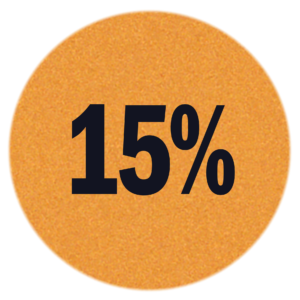
In 2024, only 15 percent of Black people in Newark believed police treated residents equally regardless of race or ethnicity

By 2024, Newark residents’ perceptions declined regarding community members’ feelings of safety, how police performed when interacting with the community and officers’ cultural competency. Only 15 percent of Black people in Newark believed police treated residents equally regardless of race or ethnicity.

In 2025, as the Consent Decree neared its end, the Institute’s final survey showed mixed results. Most residents felt safe in their homes and expressed respect for police officers. More than half reported at least some trust in police. Yet nearly half of Newark residents still rated the police department as fair or poor, and fears of excessive force – especially against family members – had increased since 2017.

In the wake of the end of the Consent Decree, on January 19, 2026, a Newark police officer fatally shot 42-year-old Wali Bey. The officer involved had 25 use of force incidents since joining the department in June 2022. As the writing of this report, the investigation into this incident continues and is being carried out by the Attorney General’s Office of Public Integrity and Accountability. This is an example of the distance that is still left to be traveled by the Newark Police Division.

What Changed and Why It Matters: Final Audits

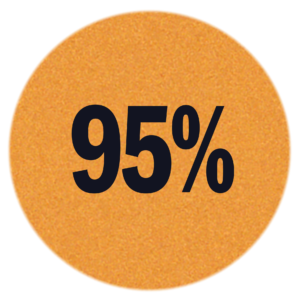
By the final audit, the Monitoring Team evaluated progress across 10 priority areas. Final audits showed that the Newark Police Division achieved at least 95% substantive compliance across all ten, sustained across multiple audits. These areas included (1) Bias-free policing; (2) Body-Worn Cameras; (3) Use of Force/Force Reporting; (4) Firearms and Weapons; (5) Stops and Searches; (6) Arrests; (7) Community Policing; (8) Property and Evidence Management/Division; (9) Complaint Intake and Investigation; and (10) Disciplinary Processes. Significant strides were made, particularly in bias-free policing as it related to on-the-street stops, training and overall community engagement to help rebuild public trust. But more work remains, especially in police interactions with youth.

Final audits showed that the Newark Police Division achieved at least 95% substantive compliance across all ten priority areas, sustained across multiple audits.

16 New Policies and Procedures

As a result of the Consent Decree, 16 new policies now govern Newark policing. These include:

  1. Bias-Free Policing: prohibits Newark Police officers from treating people differently based on any actual or perceived characteristics of that person;
  2. Body-Worn Cameras: requires uniformed Newark officers, detectives and sergeants to wear body cameras while on duty;
  3. In-Car Cameras: requires that all marked Newark Police Division cars be equipped with cameras and for them to be activated during interactions with the public;
  4. Use of Force: requires that Newark officers use the minimum amount of force necessary when incidents arise and de-escalate as the need for force dissipates;
  5. Use of Force Reporting, Investigation and Review: requires Newark Police Division members to report any time force is used;
  6. Firearms and Other Weapons: prohibits Newark officers from carrying any weapon that has not been expressly authorized by the Police Division;
  7. Stops: requires that Newark police officers have a credible reason to stop people based on what the New Jersey and United States constitutions allow or they can face discipline, be sued or face criminal charges;
  8. Searches: requires all searches performed by Newark police officers be performed lawfully under the United States and New Jersey constitutions, free from biases.
  9. Arrests: requires Newark Police Division officers to only make arrests based on probable cause and that are lawful under the United States and New Jersey constitutions. Officers are prohibited from using race, gender, sexual orientation or any other biased reason for arrest;
  10. Community Policing: requires that Newark officers be service-minded when they come into contact with any member of the community. The Police Division is also required to hold quarterly meetings with stakeholders about whether goals are being met;
  11. Property and Evidence Management: requires that property coming into police possession is properly recorded and documented – instituted because of community complaints;
  12. Property and Evidence Division: creation of this division, which is responsible for how the property is maintained and whether the property and evidence management policies are properly implemented;
  13. Complaint Intake and Investigation: requires Newark police to take complaints against them seriously and for police misconduct to be addressed
  14. The Disciplinary Process: establishes a disciplinary process that requires transparency, fairness and consistency to address police misconduct within the Newark Police Division;
  15. LGBTQ Community and Police Interactions: requires Newark officers to treat everyone equally, regardless of their gender identity or expression, and prohibits use of someone’s gender identity or expression as a reason to unlawfully stop them;
  16. First Amendment Right to Observe, Object to and Record Police Activity: requires Newark Police officers to abide by the Third Circuit decision protecting the First Amendment right to photograph, film and record the police. Newark police cannot arrest people for simply recording them.


While the first 14 policies were mandated by the Consent Decree, the last two – LGBTQ protections and First Amendment policies – reflect additional commitments to equity and transparency.

The Consent Decree Ends – Newark Offers a Model for Other Cities

When Judge Arleo formally terminated the Consent Decree, she found that after nine years it had achieved its core objective by committing the time, resources and sustained effort necessary to produce systemic change. The court further concluded that Newark now has the tools in place to continue improving on its own. It was “now time to return [Newark Police] back to its elected leadership and its community.” This milestone matters, but not because it marks an ending. It matters because it offers a blueprint. Newark’s police transformation was built from the ground up – rooted in community voice, accountability and collective advocacy. Newark’s Consent Decree stands as an example of what disciplined, community-centered reform can achieve. It shows that constitutional policing is possible, that trust can be built, and that meaningful change can occur when a city is serious about transformation. But Newark remains a work in progress as shown by the police involved killing of Mr. Bey. What Newark accomplished is an important step in building a police department that residents have advocated for going back to the Newark Rebellion: a city that respects its Black residents, holds those in power accountable, and creates a police department that serves the people, not that harms them. The Consent Decree helped to position Newark as an example to the nation for what is possible when communities and institutions insist – together – on accountability. As the Consent Decree has ended, responsibility now rests with Newark’s leadership and its people. It also rests with communities and advocates across the country who must continue advocating for police departments that are just, accountable and rooted in community safety. Newark does not offer a finished product. It offers a promise – and a path forward.


What’s Next?

For residents of Newark, the biggest question at the end of the Consent Decree is: What happens next?

At the final community meeting held under the Consent Decree, Newark residents did two things at once.  They acknowledged the progress that has been made – and they made clear that more work remains.

With federal oversight now concluded, Newark – and New Jersey’s communities more broadly – must step into the role of monitors of their own police departments. Alongside advocates, they must advocate for their elected officials to enact laws to further prevent police abuse and protect the people.

Recommendations

Learning from Newark

Newark did not adopt its 16 policing policies for reform until compelled to do so by a federal Consent Decree. Other municipal police departments do not need to wait. Police departments across New Jersey should review Newark’s policies, along with the training for those policies, and adopt them proactively. Cities should engage with Newark and organizations like the Institute to develop clear plans for implementation.

Continuing to Build Public Trust

Newark has served as a model for ongoing rebuilding trust between law enforcement and the community with a commitment to continued transparency. In this moment, New Jersey must hold all law enforcement agents and agencies to that same level of accountability. New Jersey must pass an anti-masking bill, a bill banning ICE agents from infiltrating state and municipal law enforcement, and a bill providing a civil remedy for those harmed at the hands of ICE agents. Now is the time for New Jersey to protect its most vulnerable citizens and shore up our state’s protections against the aggression of the federal government.

Reinvesting Funds from Police Budgets into Community-Based Violence Interruption Programs That Keep Communities Safe

The reform work in Newark Police Division has led to significant cost savings for the city and the department with a reduction in settlements. This money should be reinvested into the community as a commitment to continued reform and rebuilding trust. To maintain public safety, the reinvestments should support Newark’s cure violence programs like Brick City Peace Collective that work in collaboration with law enforcement to keep communities safe and heard.

Banning Chokeholds

To prevent fatal police encounters and excessive force – especially against Black and Brown people in New Jersey – the legislature must ban police chokeholds. Bills already introduced (A1683/S213) would do just that. If passed, New Jersey would join nine states and Washington D.C. in prohibiting this lethal practice.

Protecting the Right to Record Police

From Rodney King to George Floyd, video footage captured by everyday people has fundamentally reshaped the national conversation on policing. In New Jersey, the Attorney General has affirmed that the First Amendment protects right to film police officers in public and private spaces. The legislature must codify this right into law, aligning New Jersey with states like New York and ensuring this essential accountability tool is protected.


The Institute and ACLU of New Jersey partnered on a Policy Brief stressing the right to record police in 2021.

Civilian Complaint Review Boards with Subpoena Power

Newark’s Civilian Complaint Review Board (CCRB) plays a vital role in hearing community complaints arising from police encounters. But CCRBs across New Jersey lack subpoena power – the ability to compel documents and body-worn camera footage to confirm community complaints. Without it, transparency is limited and community members face unnecessary barriers to accountability.

Legislators must pass pending bill (S2832) granting subpoena power to CCRBs and providing adequate funding for attorneys to pursue full legal action on behalf of affected community members. Cities like New York and Chicago, where CCRBs emerged from consent decrees – demonstrate how subpoena power enables meaningful review of police misconduct.

Codifying the Attorney General’s Authority to Supersede Police Departments

In March 2023, following the fatal shooting of Najee Seabrooks, the New Jersey Attorney General assumed control of the Paterson police department. The New Jersey Supreme Court upheld that decision – but left unresolved whether the Attorney General could act similarly in the future.

The legislature must pass a law clearly authorizing the Attorney General to take over a police department where a pattern of civil rights violations persist – particularly at a moment when the federal government has indicated that consent decrees like Newark’s will never happen again.


Justice for Najee Seabrooks Rally, 2023

Community Accountability Panels

Building trust comes from listening and taking accountability. After police-involved incidents, police officers should be required to meet with affected individuals and the broader community through structured accountability panels. This can be accomplished by expanding and fully funding the Restorative and Transformative Hubs established by legislation in 2023. These panels can build on existing infrastructure and mirror the current Restorative Justice Hubs already in place in New York, California, Massachusetts, Colorado and Maryland.

Public Accountability Records

Transparency requires access to information. Every New Jersey municipality must create and maintain a free, public database documenting substantiated internal affairs findings, use of force incidents and disciplinary actions – similar to those systems already operating at the federal level and in New York and California. By making data on community-related disciplinary actions and police force incidents easily accessible for the public, the public can continue to require officers to protect and serve them.

Adopt a CAHOOTS model of Crisis Response

New Jersey’s ARRIVE Together program marked progress by pairing police officers with mental health professionals during crisis calls. But the tragic deaths of Victoria Lee, Najee Seabrooks and Debra Terrell make clear that this model does not go far enough.  This is in part because the ARRIVE Together model does not create a separate, community-based mental health response apart from the police. New Jerseyan must require a CAHOOTS (Crisis Assistance Helping Out on the Streets) type program for crisis response, like what is modeled in Oregon, where a mental health specialist and emergency medical technician would arrive on scene in lieu of a police officer for any non-criminal mental health crisis calls. This would provide the necessary de-escalation skills for these types of scenarios.

End Qualified Immunity

Qualified immunity shields police officers from civil liability, even when they have violated constitutional rights. It has become a barrier to police accountability and a license for repeated harm to the community. Ending qualified immunity would remove that barrier and ensure meaningful consequences for police misconduct.

Funding Rights Public Education

Communities should know their rights – and what constitutional policing looks like. New Jersey’s Public Defender’s Office is uniquely positioned to lead this effort. New Jersey should fund a Community Justice Unit dedicated to Know-Your-Rights education, prioritizing communities that have suffered the greatest impact of police brutality and misconduct.


CONCLUSION

Consent Decrees like Newark’s matter. They provide oversight for period of time and establish a foundation for lasting change. In Newark, they led to culture change, inspired by 16 new policies and training for those policies – and the building of a new relationship between law enforcement and the communities they serve.

With the Newark Consent Decree now concluded,

New Jersey should build on its lessons to lead the

state and the nation in police accountability and reform.